Jobwork Completion Form
Streamline and enabling real-time tracking, collaboration, and faster payments across inventory, production, and finance teams.
Problem Statement
The jobwork completion process was manual, error-prone, and lacked real-time tracking.
This caused coordination issues between job workers, production managers, and finance teams.
Resulting in delayed payments, inefficient workflows, and miscommunication around job status, stock levels, & rejections.
Impact
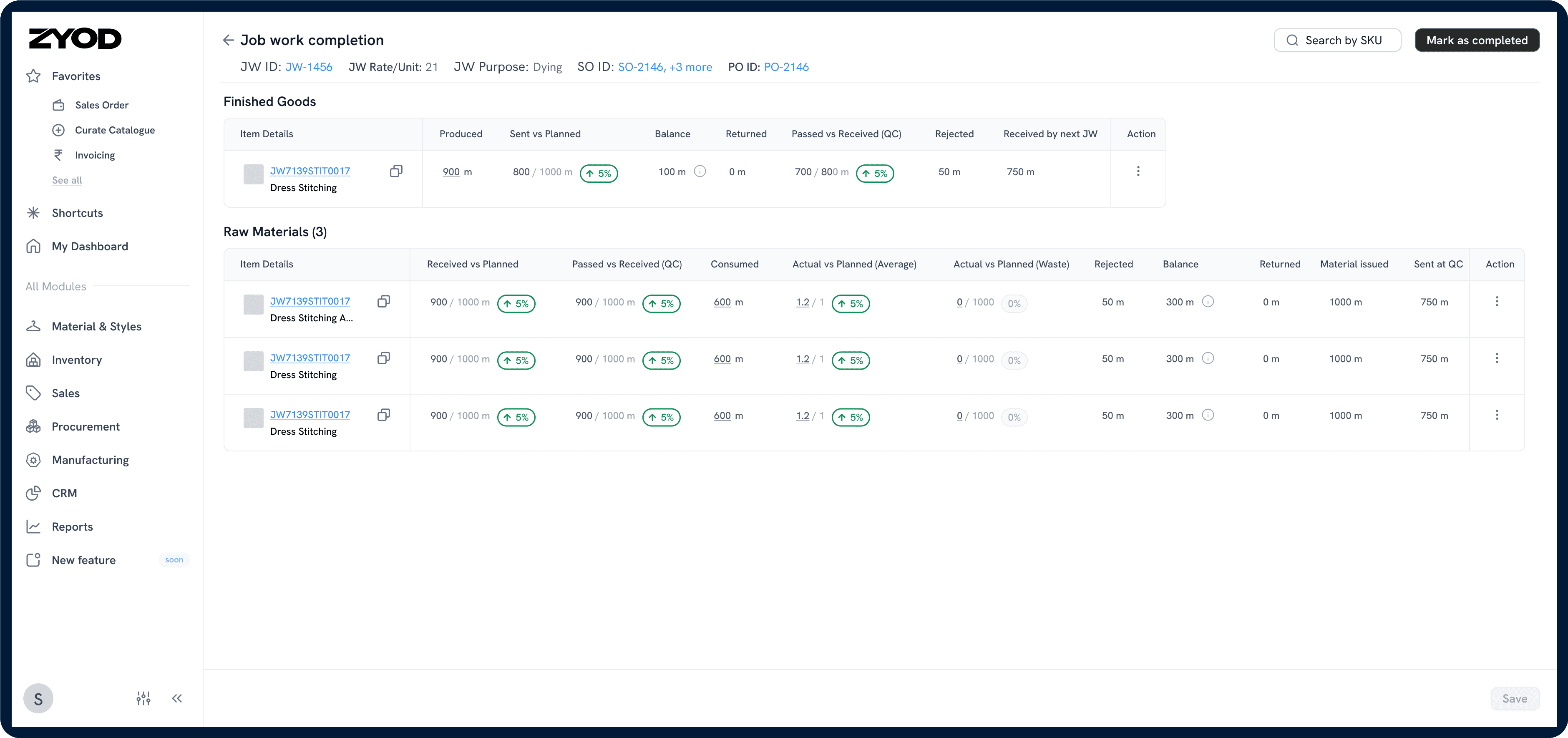
The optimized Jobwork Completion Form reduced manual errors by 50%, accelerated payment approvals by 30%, and provided real-time tracking for accurate and efficient jobwork management.
Faster workflows improved collaboration between stakeholders and reduced delays in production and dispatch.
Research Insights
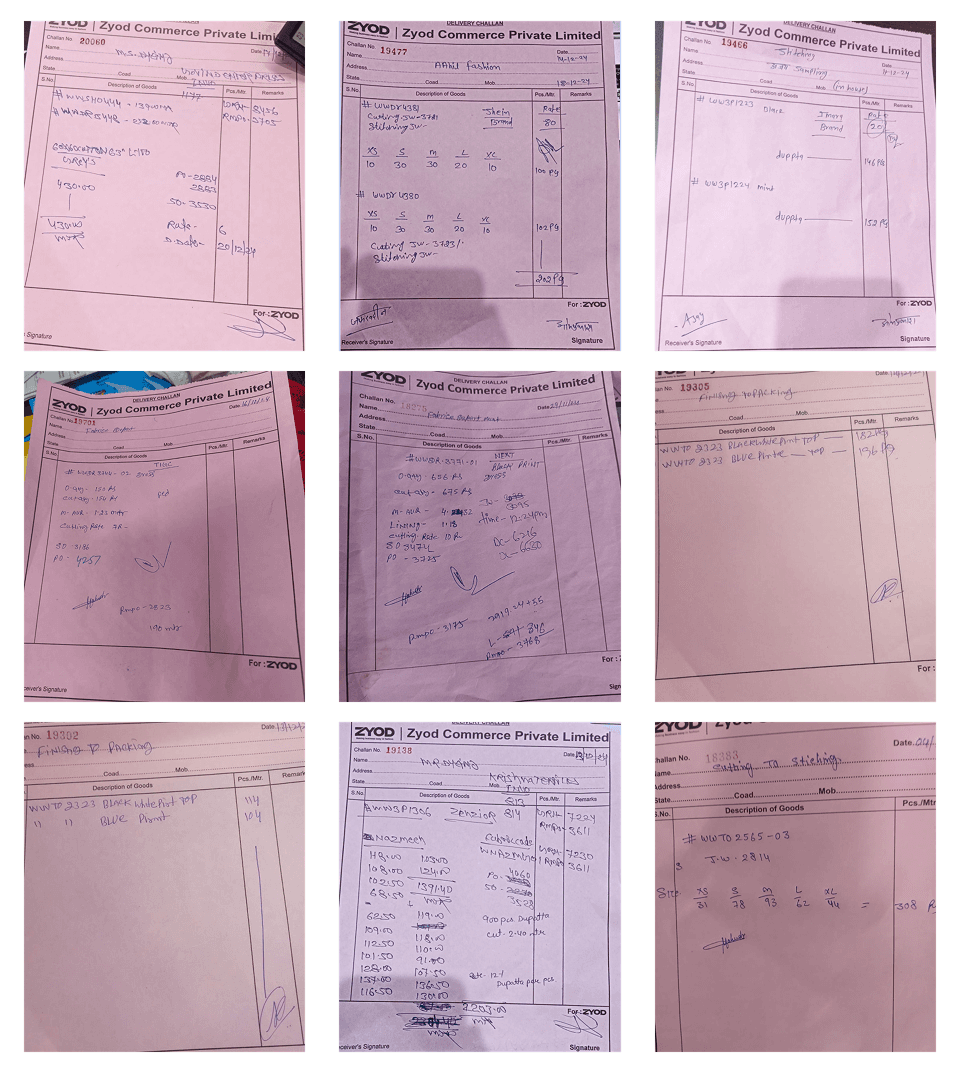
Reliance on physical paperwork increases risk of data loss and slows down workflow updates.
Manual processes introduce frequent errors and inefficiencies at each stage.
Communication is fragmented—important updates and decisions are easily missed without a central platform.
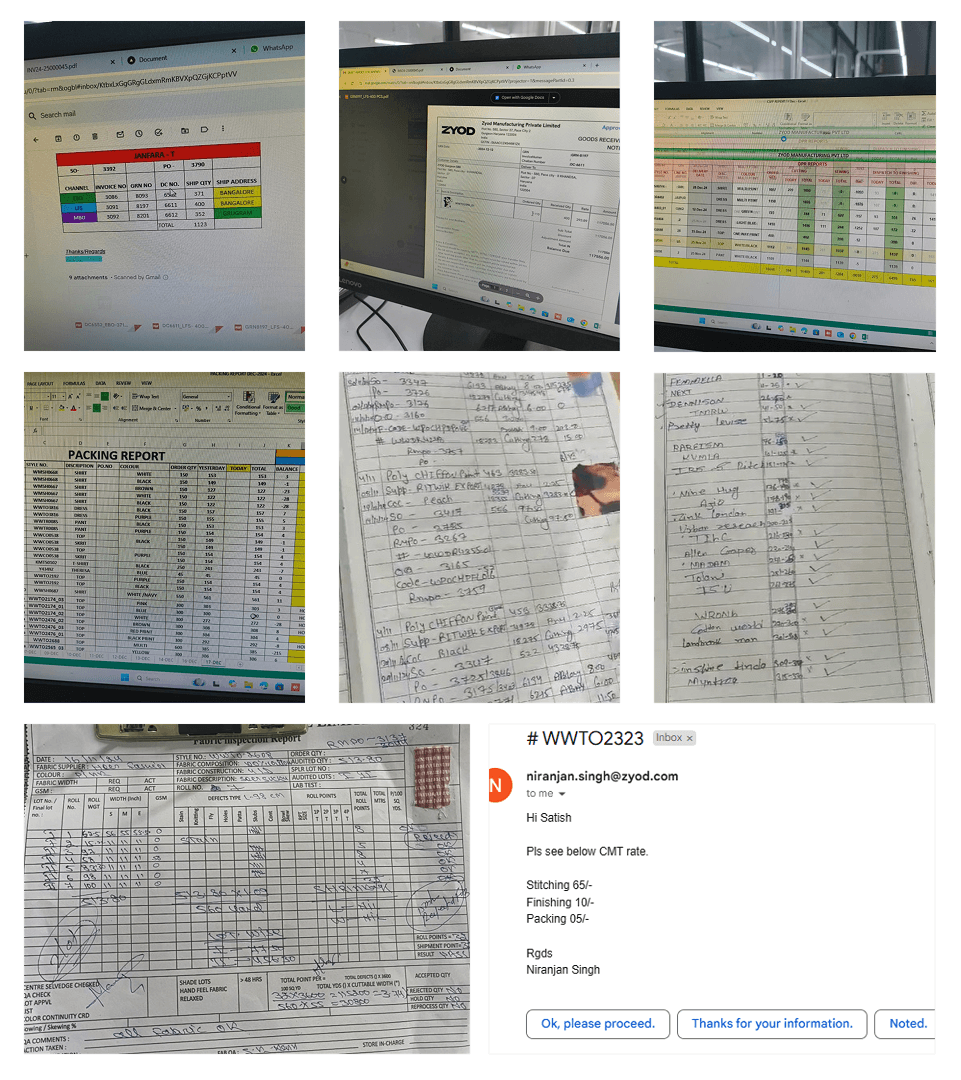
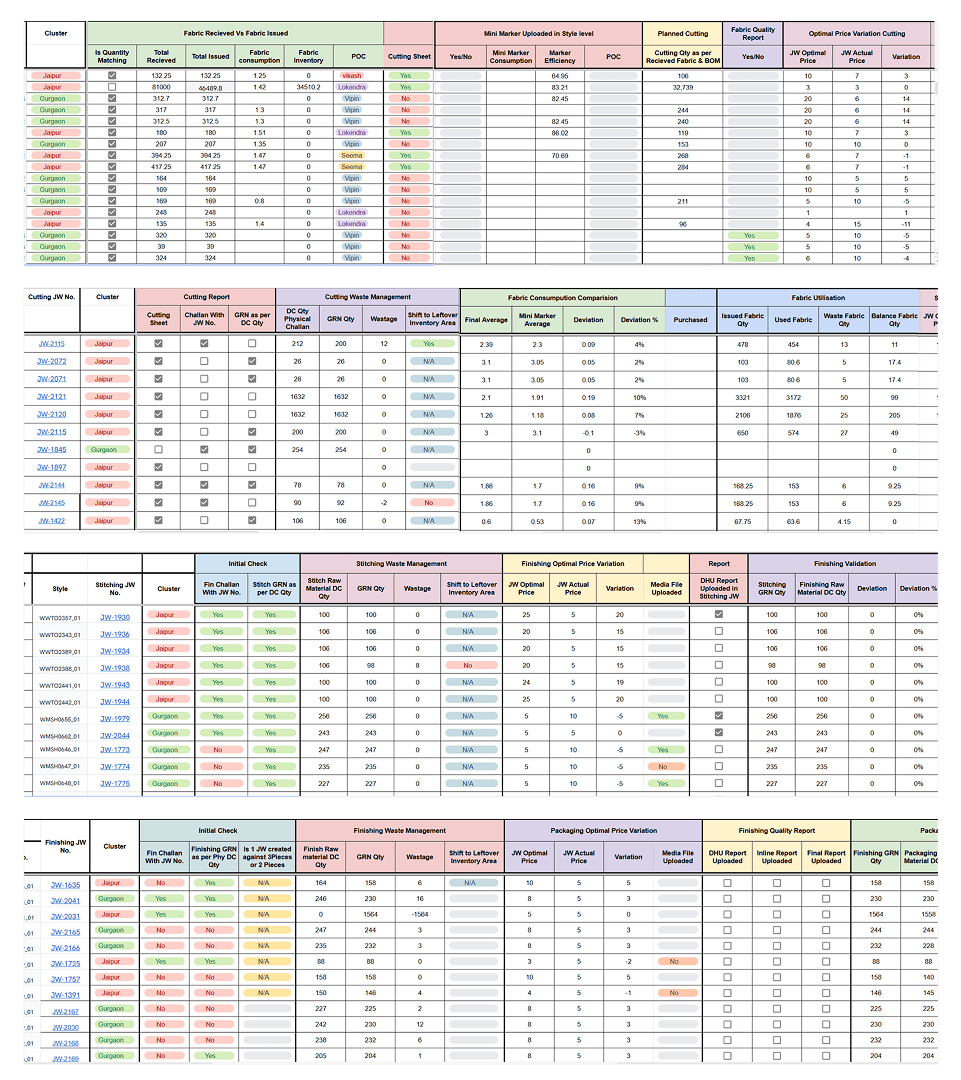
Data is siloed across departments, making it hard to get a clear, real-time picture of job status.
Stakeholders lack actionable insights due to scattered and inconsistent data sources.
User Problems
Tracking Inefficiencies: No clear way to monitor extra, pending, or completed job work.
Manual Dependencies: Updates shared via Excel or verbal communication caused delays and errors.
Approval Delays: Inconsistent workflows resulted in bottlenecks for approval and payments.
Visibility Gaps: Real-time inventory and job progress tracking were missing, worsening miscommunication.
User Needs
Job Workers: A straightforward way to report updates on job status.
Production Managers: Visibility into job work progress at every stage.
Finance Teams: Real-time data for accurate payment calculations and tracking QC rejections.
Flow Documentation (Use Cases & Users)
Foundation for Design: Provided a blueprint for developing workflow features that reflect real user journeys, reducing oversights and gaps.
Consistency: Helped maintain consistency in tracking, approvals, and compliance, ensuring every stakeholder had clarity about their responsibilities.
Error Reduction: Minimizing manual confusion and errors by clearly aligning the digital process with actual work scenarios.
Faster Adoption: Made it easier for users to adapt to the new system, since the software matched their real work.
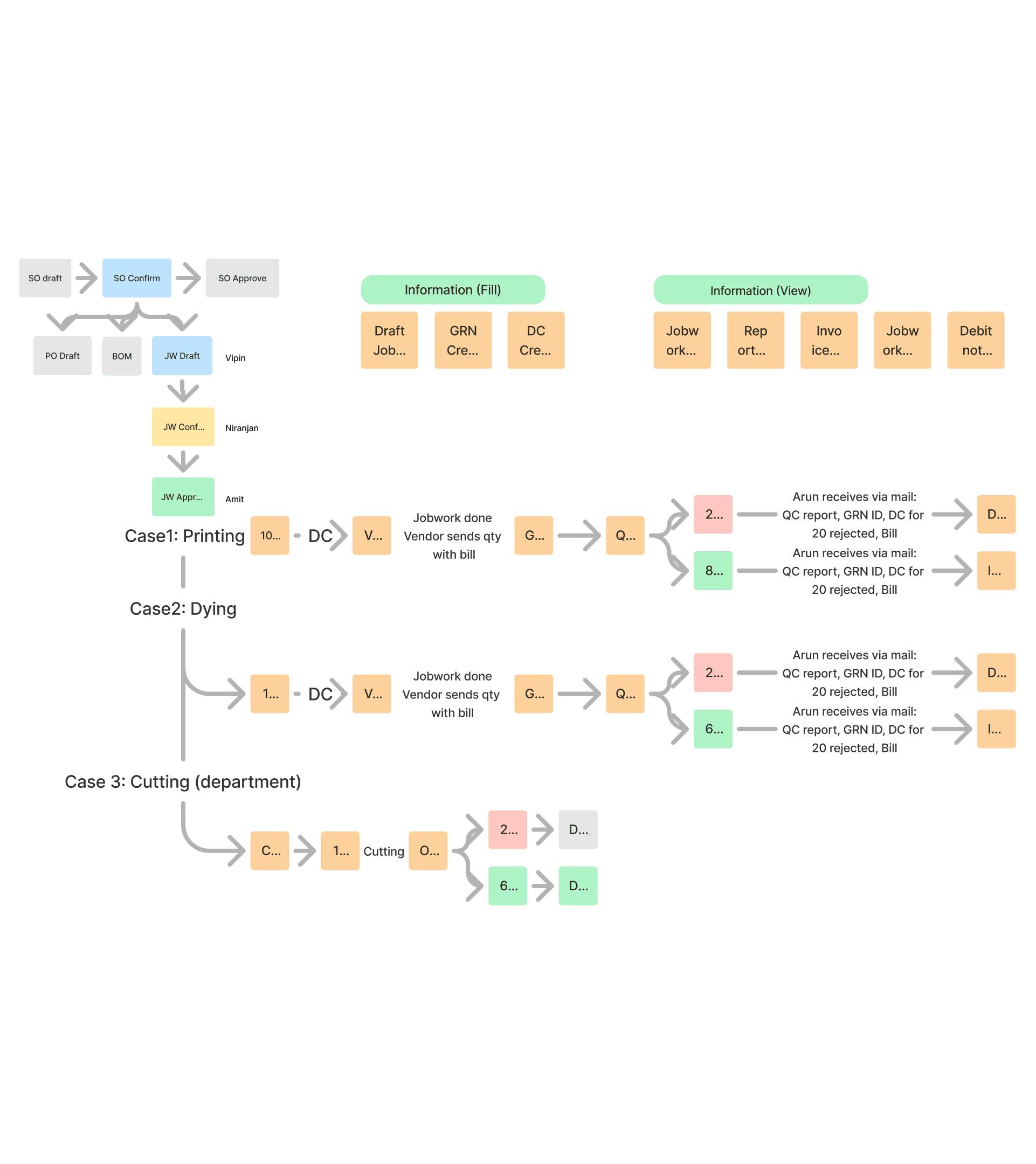
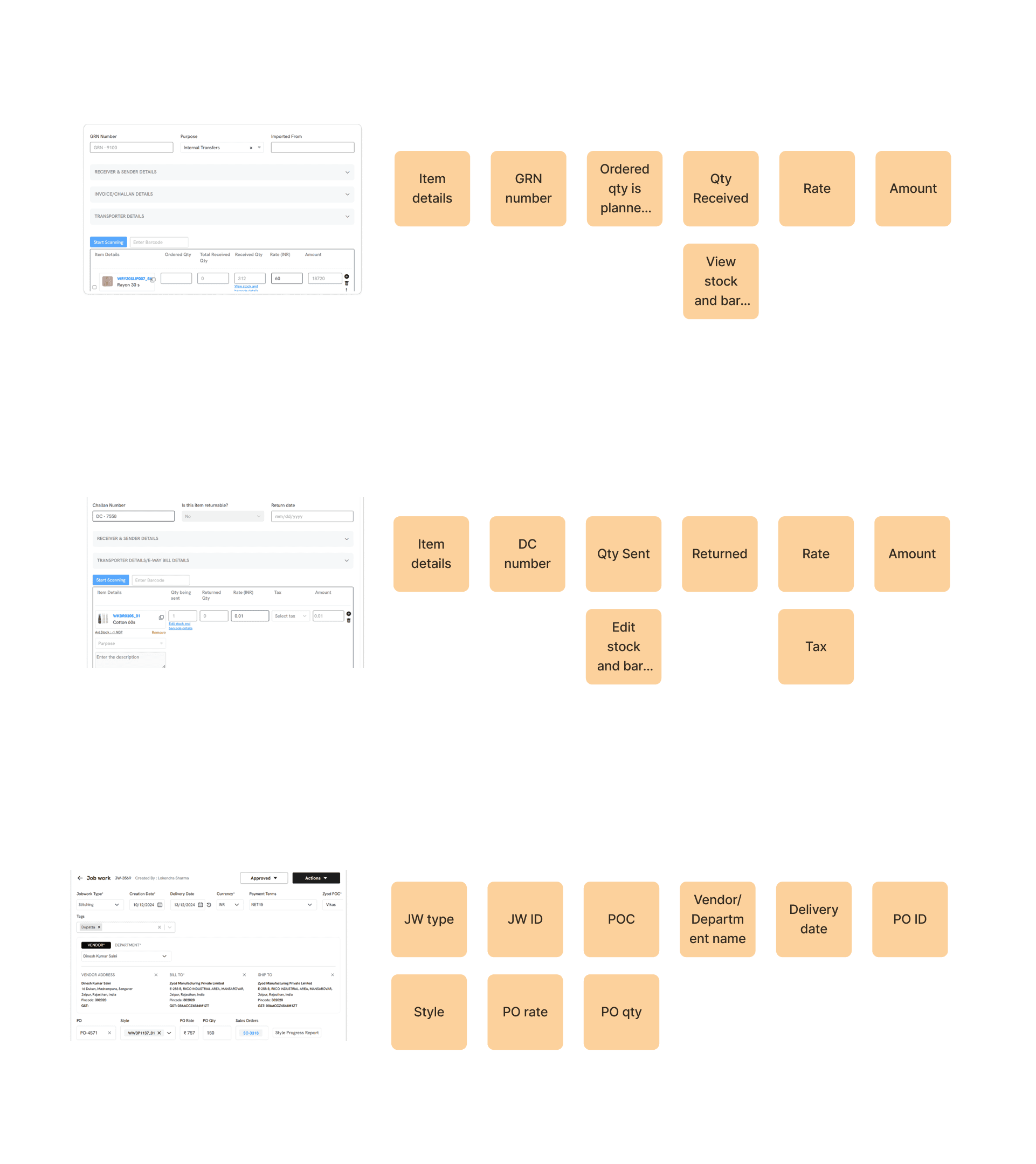
Critical Data Points Discovered
Accurate Tracking: Ensured that the system captured all vital quantities and statuses, enabling better monitoring and control at every step.
Reliable Insights: Allowed streamlined, real-time reporting (e.g., quantity discrepancies, quality checks, payment triggers) for both operations and finance.
Automated Calculations: Enabled automation of routine financial calculations and checks, cutting down on manual work and errors.
Scalability: Created a solid data architecture that made it easier to add new features or integrate with other business systems in the future.
Process Mapping 1
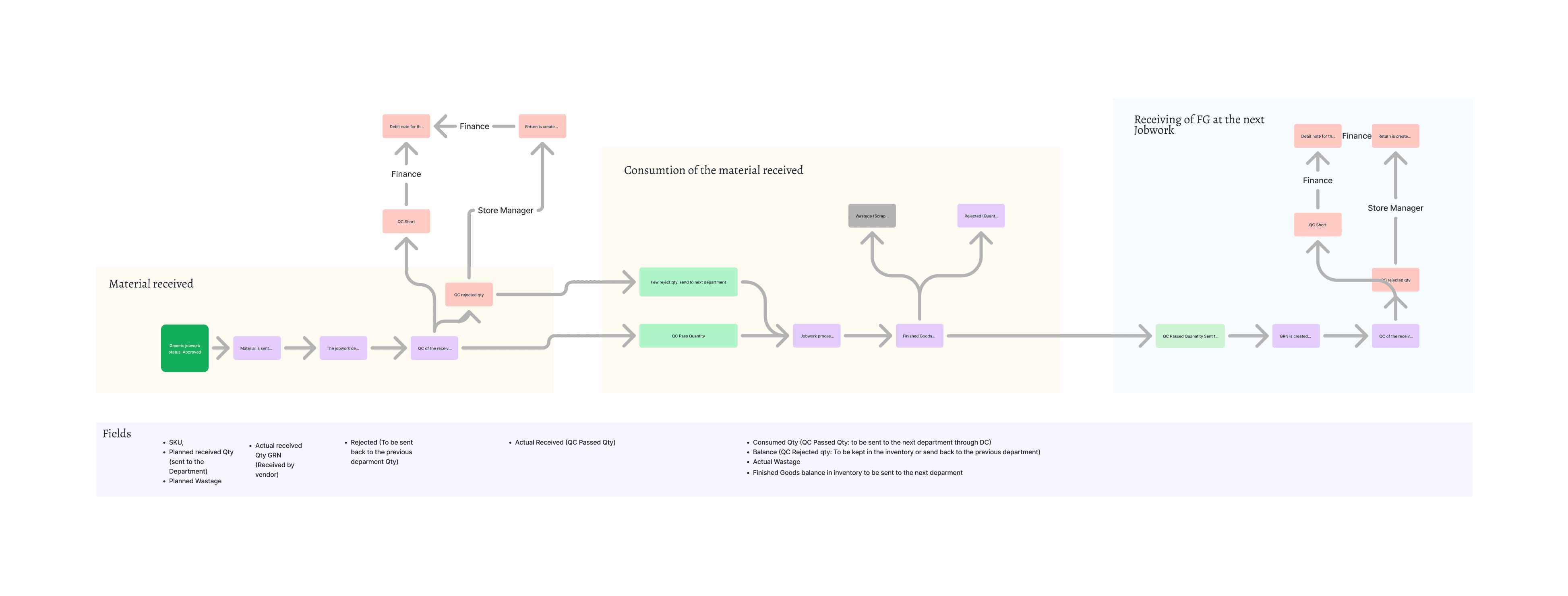
Purpose:
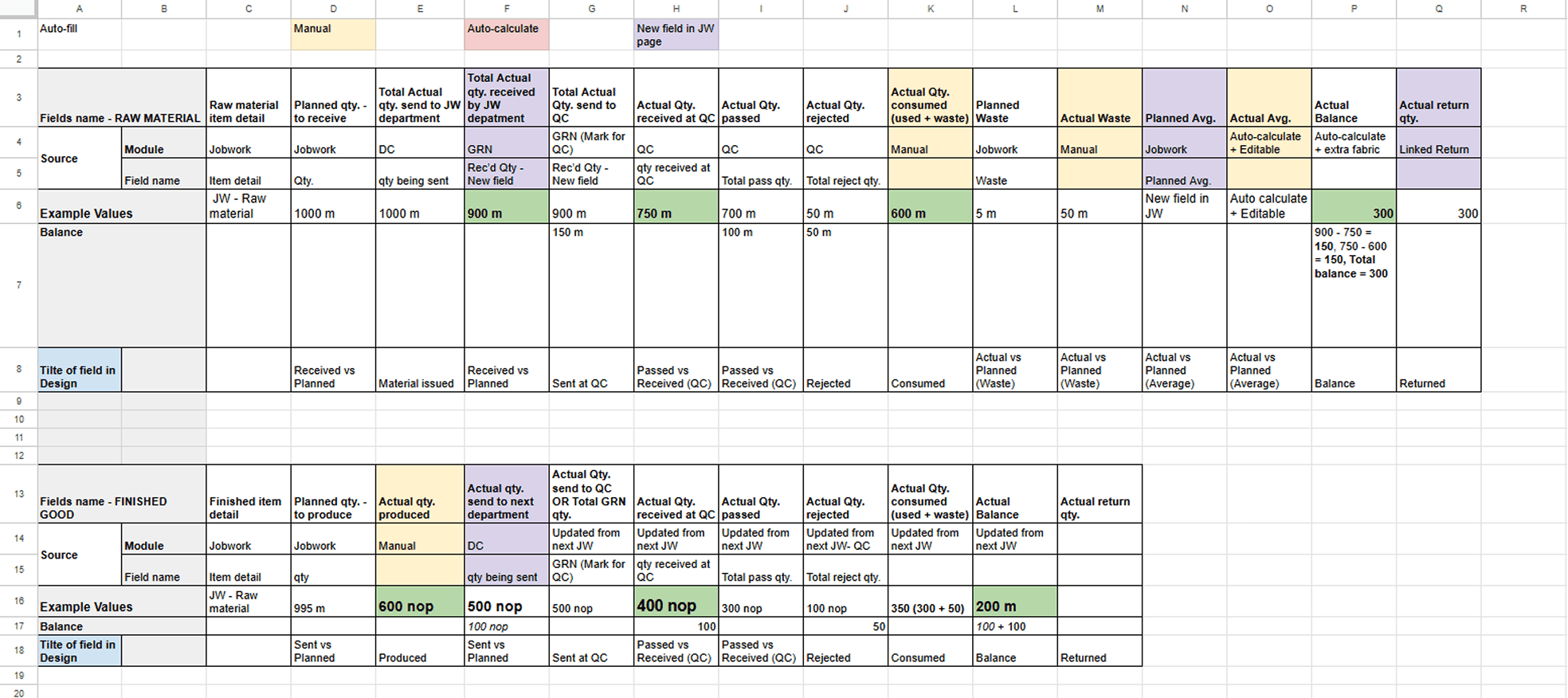
To systematically analyze and visualize the flow of raw materials and finished goods throughout the jobwork process, capturing all key stages and interactions.
How this Helped?
Clarity for All Stakeholders: Improved communication between teams by providing a visual reference that everyone could follow.
Foundation for Automation: Set the stage for developing automated workflows by clearly defining how and when materials and data move through the process.
Error Identification: Made it easier to spot manual bottlenecks or areas prone to error, so they could be targeted for improvement.
Process Mapping 2
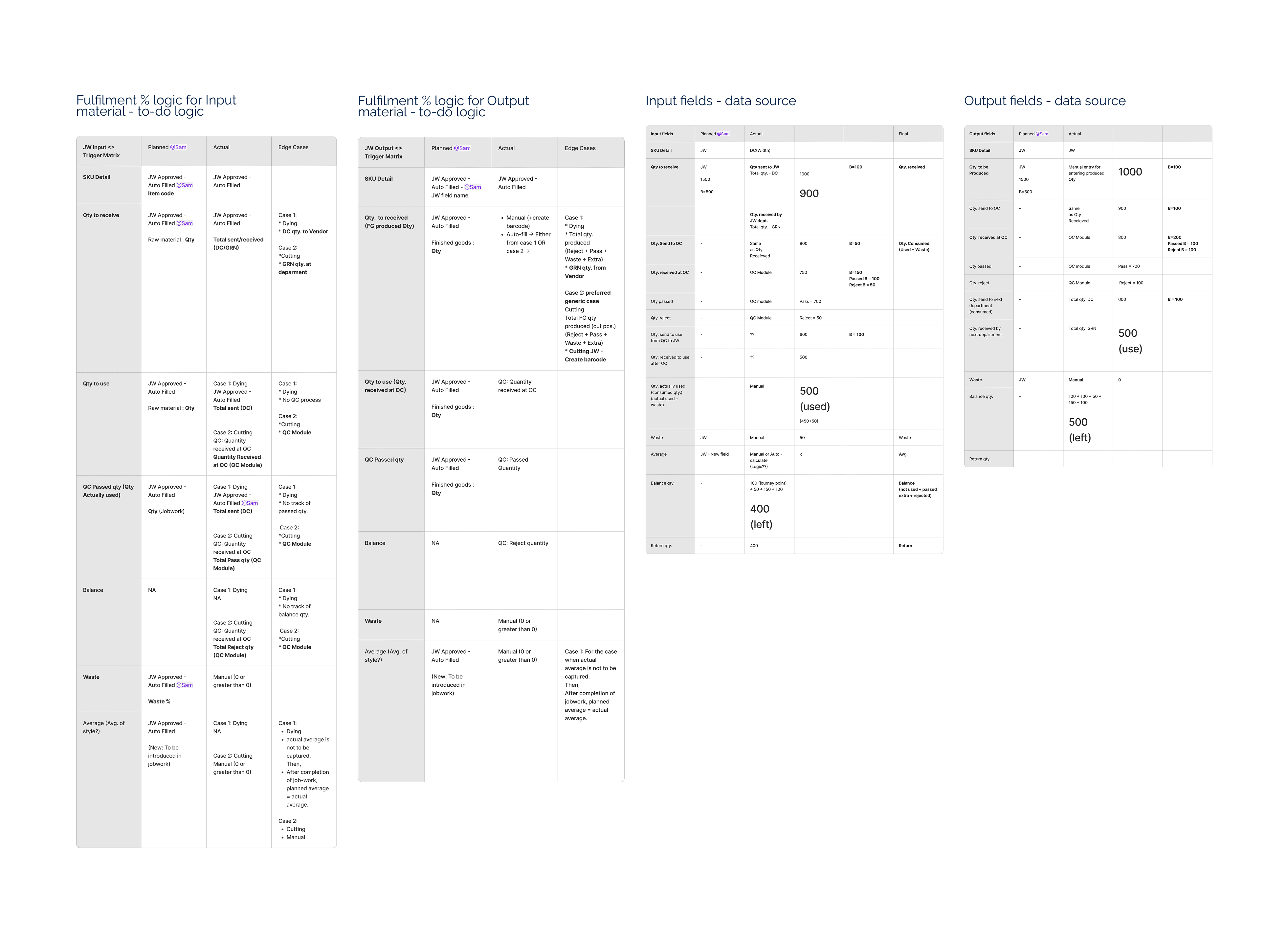
Purpose:
To break down and define the logic for fulfillment percentages, input and output calculations, and edge cases for both input and output materials.
How this Helped?
Robust Data Handling: Gave precise rules for data entry, validation, and processing, reducing mistakes in system implementation.
Edge Case Management: Ensured that exceptional situations (e.g., rejects, wastage, stock discrepancies) were anticipated and handled within the system, minimizing future troubleshooting.
Accurate Calculations: Allowed the development team to automate complex calculations, making real-time reporting and tracking possible.
Process Mapping 3
Purpose:
To create a unified, streamlined data flow from raw materials to finished goods, summarizing how all data points and calculations fit together for reporting and decision-making.
How this Helped?
Consistent Reporting: Enabled reliable, end-to-end reporting of inventory and production metrics, essential for business intelligence and decision-making.
Scalability: Built a scalable framework that makes it easier to add new materials, products, or jobwork stages in the future.
Integration-Ready: Provided a data architecture suited for connecting with other business modules or external systems.
Solution
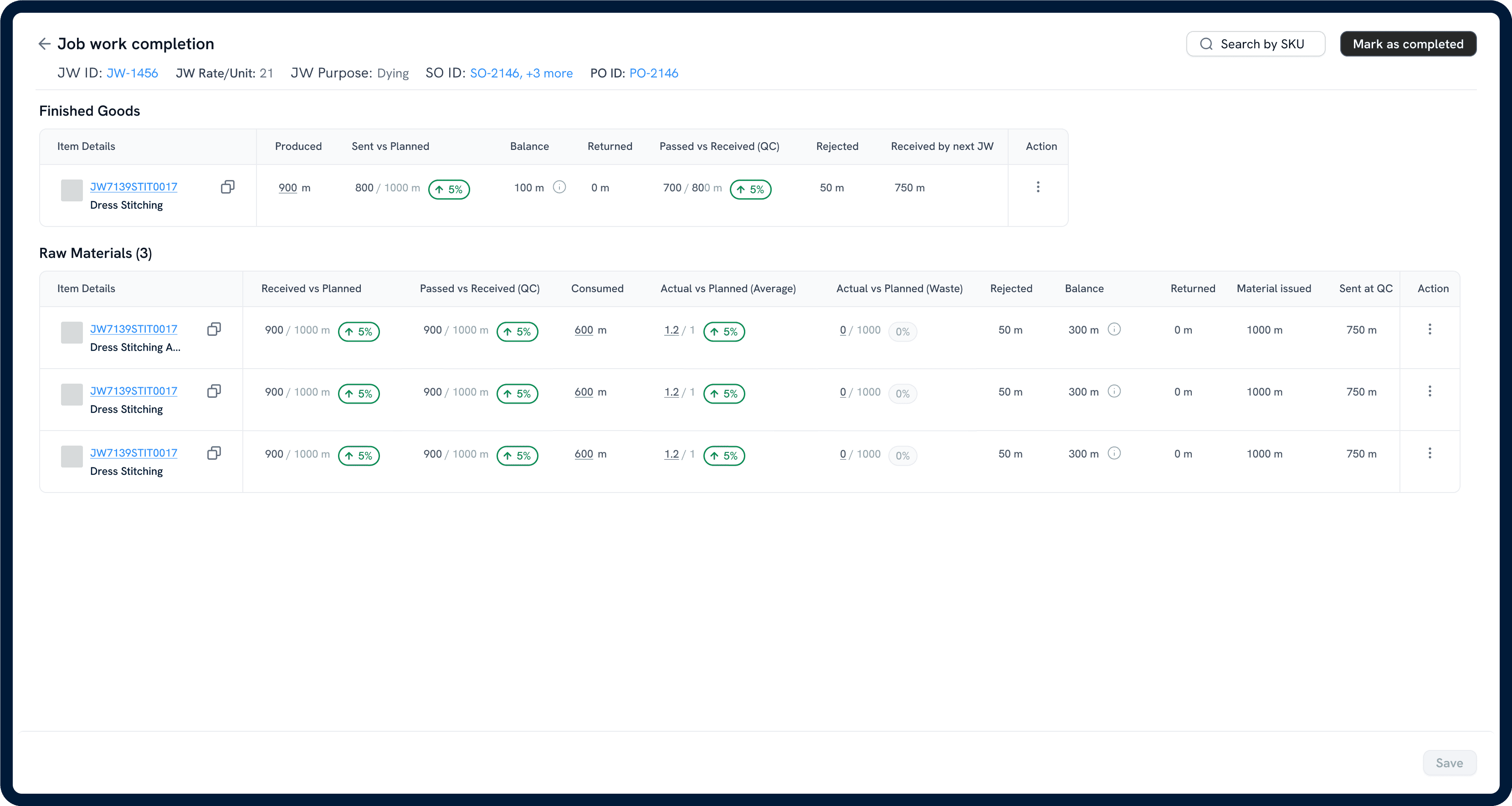
Data consolidation: The entire inventory journey, including planned, consumed, and returned items.
Entering Consumption: Designed an intuitive flow enabling job workers to input actual consumption data compared to planned quantities.
User Journeys: Users can mark a jobwork as completed and can revoke completion.
Quick Comparison of Data Points: Immediate visibility of discrepancies (e.g., % difference between planned and actual quantities) through dynamically updated badges.
Badge Indicators: Highlight discrepancies in the process in a user-friendly, color-coded manner (e.g., yellow for slight deviations, red for critical deviations).
Barcode Generation for Finished Goods: Enabled a streamlined barcode generation process that integrates with the inventory module, improving finished goods tagging and ensuring enhanced traceability.
Return Invoice for Raw Material: Simplified actions for returning extra raw materials while generating detailed return invoices for tracking.